Water is one of society's most essential resources, and the engineers who treat, manage, and protect it have never been in higher demand. Ensuring a sustainable supply of safe drinking water, upgrading wastewater treatment, and managing floods, droughts, and the growing pressures of climate change and urbanization all call for engineers fluent in two deeply connected themes: water quality (treatment) and water quantity (resource management). The MEng Emphasis in Water Treatment & Management brings these themes together in a single, flexible pathway. Building on the Department's internationally recognized expertise in drinking water treatment, and strengthened by new faculty working in water supply and resource management, the emphasis lets you study advanced treatment processes, such as membrane filtration, advanced oxidation, and biological treatment, alongside water resources engineering, systems modelling, groundwater flow, and the intersections of water with climate, law, and global health. Offered jointly by the Departments of Civil & Mineral Engineering, Chemical Engineering & Applied Chemistry, and Materials Science & Engineering, this emphasis draws on courses from across the Faculty and beyond. Whether your ambitions lie in municipal water treatment, water resources management, or broader environmental stewardship, this emphasis will prepare you to deliver safe, sustainable, and resilient water systems.
Meet your Instructors

Lesley Warren
ProfessorEnvironmental assessment and reclamation of water resources associated with mining practices; wastewater analysis and remediation
Robert Andrews
ProfessorDrinking Water: Optimization in drinking water treatment processes/water quality in distribution systems

Susan Andrews
ProfessorDrinking Water: Water quality and chemistry in water treatment processes
Mohammed Basheer
Assistant ProfessorWater Resources and Hydrology: Hydropower planning and operations; water-energy-food nexus; coupled human-water systems.
Ron Hofmann
ProfessorDrinking Water Treatment Optimization: Disinfection and oxidation technologies
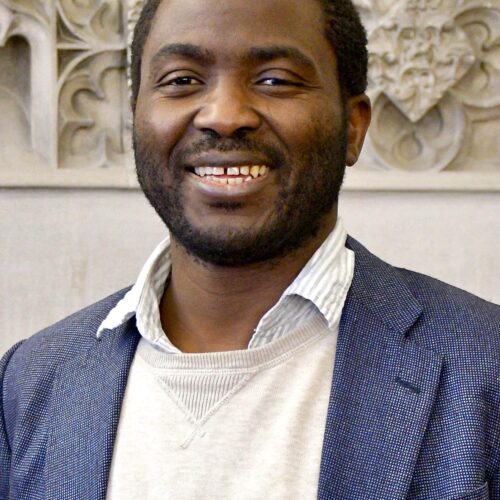
Hamed Ibrahim
Assistant ProfessorHydrological modeling and improving our understanding of the physical relations between the lower atmosphere and the earth’s surface

Bryan Karney
ProfessorSustainable Infrastructure: Design, analysis, operation and optimization of various water resource and energy systems

David Meyer
Assistant ProfessorHydraulics: Modelling of water distribution networks within global engineering context; examination/assessment of megacity infrastructure

Prof. Ron Hofmann
Meet your Coordinator
I’m the coordinator for the MEng emphasis in Water Treatment & Management, and I’d be delighted to talk to anyone interested in pursuing this area for a career, whether you're a prospective student considering applying to the University of Toronto or a current student looking to make the most of your academic journey. Engineering in the field of water treatment and management is a complex and multidisciplinary field, so planning your course options and project opportunities might be challenging. I’d be happy to help you navigate all of this as you plan your studies.
Requirements
The Emphasis in Water Treatment & Management is an optional component of Master of Engineering (MEng) in Civil & Mineral Engineering
To complete the emphasis you must complete 4 courses (2.0 FCE) from the list of courses.
- Other courses may be considered but would require approval from the Emphasis Coordinator
- With approval, one or two courses may be replaced by an MEng Project: CIV1001H (0.5 FCE) or CIV1002Y (1.0 FCE)
Featured Courses
CIV1308H - Physical and Chemical Treatment Processes
Instructor: Ron Hofmann
CIV1308H covers the theory and application of the physical and chemical operations and processes at the heart of water and wastewater treatment. Specific processes include sedimentation, coagulation, filtration, and disinfection, framed by an overview of reactor theory that ties the individual processes together into complete treatment trains. Laboratory experiments are designed to support and demonstrate the lecture material, giving you hands-on experience with the processes you'll one day design and operate. It is expected that students have taken a previous undergraduate-level course in basic water/wastewater treatment.
CIV1303H - Water Resources Systems Modelling
Instructor: Brian Karney
CIV1303H considers the physical processes in water resource systems, their mathematical representation, and their numerical solution. Newton's second law and the equations of mass and energy conservation are developed and applied to closed-conduit, open-channel, and groundwater flow problems, and procedures for efficient numerical solution of the governing equations are presented. Problems of non-linearity, sensitivity to data, and computational complexity are introduced throughout. This course builds the modelling foundation that underpins modern water management, from reservoir operations and flood forecasting to the design of resilient urban water systems.
Sample Projects
MEng students have the option of tackling real-world engineering challenges and applying their coursework knowledge by engaging in a project under the guidance of a CivMin professor. A project offers the invaluable opportunity to collaborate with experts and develop innovative solutions, enhancing a student's technical competence and preparing them for the complexities of future engineering careers. Additionally, the project can serve as a cornerstone for building a professional portfolio and showcasing capabilities to potential employers.
A CivMin MEng project is a dynamic experiential learning opportunity providing hands-on experience that can significantly boost employability and confidence as students transition into the engineering workforce. For more details, please refer to the MEng program requirements.
Explore examples of past and potential future projects below, and envision how an MEng project could be a transformative experience in your engineering education and career. Current opportunities can be found on the MEng Project Opportunities page.

Direct Potable Water Reuse: The Case for Toronto
Supervisor: Ron Hofmann
A growing fraction of the world's population is living in areas of severe water stress, and the water industry is poised to undergo a revolution in response, treating municipal wastewater to very high standards and recycling the resulting water back to the community for reuse. Toronto sits next to the world's largest supply of fresh water, yet it pumps its drinking water through thousands of kilometres of pipes, often far uphill, only for it to be used once before running back through sewers into Lake Ontario. The costs of such a once-through system are large in terms of energy, greenhouse gas emissions, and other life cycle considerations. This project explores the economic and environmental advantages and disadvantages of employing direct potable reuse in Toronto, giving students experience with engineering analysis, life cycle thinking, and state-of-the-art costing tools.

Ultraviolet Water Treatment and Nitrite Formation
Supervisors: Ron Hofmann and Yuri Lawryshyn
Water treatment using ultraviolet light is becoming increasingly common, with UV used to disinfect microorganisms or destroy chemicals. Some UV lamp technologies, however, emit wavelengths that can convert nitrate, present in some source waters through agricultural pollution, into nitrite, which is toxic and can interfere with overall treatment performance. While this conversion is theoretically possible, it has never been demonstrated whether it occurs to a problematic extent under normal operating conditions. This project combines a review of UV technology and the photochemistry of nitrate photolysis with computational fluid dynamics (CFD) modelling to predict nitrite formation under a range of treatment conditions, with the goal of producing a peer-reviewed journal article.

Water Equity by Design: Leveraging Hydroinformatics and Hydraulic Simulations to Improve Water Distribution Equity during Scarcity
Supervisor: David Meyer
Water scarcity can force water pipe networks to operate intermittently. Globally, 20% of piped water users, amounting to one billion people, receive water for only a few hours per day or week. Intermittent water supply networks present unique hydraulic challenges that standard commercial or open-source software cannot adequately address. This project leverages and enhances Python-based simulation tools, recently developed in Prof. Meyer's research group, that represent the hydraulics of water pipe networks that drain and fill daily. Participating students gain hands-on experience augmenting hydraulic simulation packages, scripting and automating simulations, and applying advanced data science techniques to improve the equity of water supply in low- and middle-income countries.
Career Outlook
A CivMin MEng from the #1 Civil Engineering program in Canada can open up a world of opportunities and supercharge your career. The University of Toronto is ranked #12 globally for graduate employability by Times Higher Education, and our alumni have secured exciting roles at a wide variety of top companies including Hatch, WSP, Aecon, Kiewit and Metrolinx.


























An MEng degree from U of T places you at the centre of an immense and invaluable alumni network. Combined with our strong industry connections and esteemed reputation, a CivMin MEng offers you almost infinite opportunities for support, professional growth and advancement throughout your career.
Graduates of the MEng who specialize in Water Treatment & Management are prepared for careers across the full breadth of the water sector. Many begin in the consulting industry, contributing to the design and expansion of water and wastewater treatment plants, distribution systems, stormwater and flood management studies, and water resources planning. Others join municipalities and utilities, regional conservation authorities, equipment and technology vendors serving the water sector, or regulatory agencies. With both water quality and water quantity challenges intensifying under climate change and urban growth, engineers who can move fluidly between treatment processes and resource management are among the most sought-after professionals in environmental engineering.
Potential Career Pathways
Treatment process engineers design, optimize, and troubleshoot the physical, chemical, and biological processes that produce safe drinking water and clean effluent. They work for consulting firms, municipalities, utilities, and technology suppliers on everything from conventional plants to advanced treatment trains featuring membranes and advanced oxidation.
Suggested pathway to prepare for a career as a water and wastewater treatment process engineer: CIV1308H, CIV1309H, CIV1311H, CHE1150H, CIV1319H, CHE1152H

AI within the Water Treatment & Management MEng
Build fluency in data analytics, machine learning and AI through world-class courses, projects, and connecting to the U of T AI community.
From online sensors in treatment plants and distribution networks to stream gauges, groundwater monitoring wells, radar precipitation, and satellite observations, water engineering runs on data. Analytics, machine learning, and AI are transforming both sides of the emphasis: on the treatment side, predictive models help optimize chemical dosing, detect anomalies in plant operations, and anticipate membrane fouling or disinfection performance; on the management side, machine learning augments hydrologic and hydraulic models for flood forecasting, reservoir operations, demand prediction, and the equitable design of water distribution under scarcity. Students in the Water Treatment and Management emphasis can apply these tools in courses on water resources systems modelling and through MEng projects ranging from CFD-based treatment studies to hydroinformatics for intermittent water supply.
Discover other complementary Emphases to
boost your Master of Engineering experience