Nuclear energy is undergoing rapid transformation in Canada, driven by the country's growing electricity demand and the need for alternative energy sources to reduce greenhouse gas emissions. Nuclear power already supplies about 14% of Canada's electricity, and more than half of Ontario's, from CANDU (CANada Deuterium Uranium) reactor fleets at stations such as Bruce, Darlington, and Pickering. Now a new wave of investment is underway: Ontario is leading the G7 in building the first grid-scale small modular reactor (SMR), with the BWRX-300 under development at Darlington, SMRs proposed at Point Lepreau, and proposals for thousands of megawatts of additional capacity at Bruce C and beyond. At the same time, the existing fleet requires refurbishment, life extension, and eventually decommissioning, work that will span decades. Canada has also chosen where spent nuclear fuel will be stored: a deep geological repository is planned 650 to 800 metres down in the granite of the Canadian Shield in northwestern Ontario, with the location and storage plan moving through the regulatory process.

Structural engineering is a key discipline that underpins the safety of nuclear power plants. Structural engineers in the nuclear sector evaluate the integrity of the containment building, assess the impact of seismic excitations and soil-structure interaction, evaluate plants against natural and man-made hazards, and perform leak-tightness assessments of prestressed containment structures. Research and industry projects in our Department span the impact of ageing on the structural integrity of containment buildings, drying shrinkage through thick containment walls, the effect of solar radiation on measured strain during integrated leak rate testing, air leakage through cracked concrete walls, and the behaviour of shear walls in auxiliary buildings. Students in the Structural Engineering emphasis train in steel and concrete under static, fatigue, seismic, blast, impact, and fire loading, exactly the toolkit nuclear structural work demands.

- CIV416H1: Reinforced Concrete II
- CIV514H1: Concrete Technology
- CIV515H1: Introduction to Structural Dynamics
- CIV517H1: Prestressed Concrete
- CIV519H1: Structural Analysis II
- CIV510H1: Solid Mechanics II
- CIV518H1: Behaviour and Design of Steel Structures
- CIV1175H, Design of Tubular Steel Structures
- CIV1180H, Advanced Modelling Methods for Seismic Performance Assessment of Structures
- CIV1190H, Structures Under Blast and Impact
- CIV1163H, Mechanics of Reinforced Concrete
- CIV1167H, Advanced Structural Dynamics
- CIV1169H, Advanced Topics In Building Design
- CIV1171H, Principles In Earthquake Engineering and Seismic Design
- CIV1174H, Finite Element Method In Structural Mechanics
- CIV1191H, Design of Structures for Fire Resistance
- CIV1159H, Structural Health Monitoring
Meet your Instructors
Oh-Sung Kwon
ProfessorStructural Dynamics: Earthquake engineering; seismic soil-structure interaction
Evan Bentz
ProfessorNumerical Modelling of Reinforced Concrete Behaviour: Technology transfer applications for research on shear and torsion
Research Project Highlights:
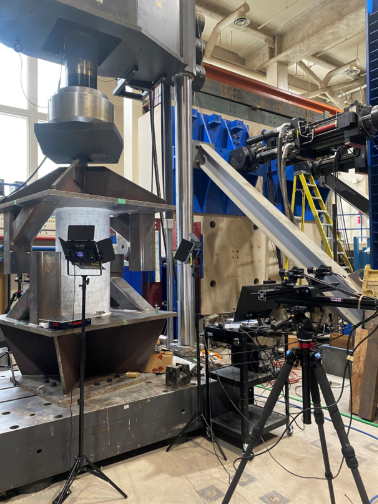
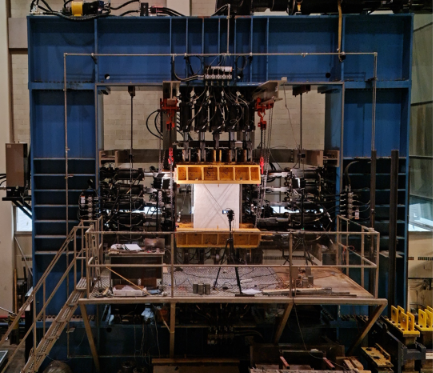
Nuclear containment structures are among the most demanding concrete applications in the world: heavily reinforced and prestressed, leak-tight, with walls more than a metre thick, often accessible from one side only, and exposed to coupled degradation mechanisms that range from exterior freeze-thaw cycles to interior reactor conditions and alkali-silica reaction (ASR). Our concrete faculty work directly with the nuclear industry on these challenges, from the condition assessment, repair, and long-term instrumented monitoring of ageing containment structures (including the landmark rehabilitation of the Gentilly-1 ring beam) to research on ASR, carbonation, and durability supported by partners such as the Canadian Nuclear Safety Commission, the CANDU Owners Group, AtkinsRealis, Kinectrics, Atomic Energy of Canada Limited (AECL), and Canadian Nuclear Laboratories.

Meet your Instructors

Daman Panesar
ProfessorConcrete Materials: Sustainability and durability of cement-based materials and structures

Karl Peterson
Associate ProfessorConcrete Materials: Microstructural analysis of concrete and other building materials
Research Project Highlights:

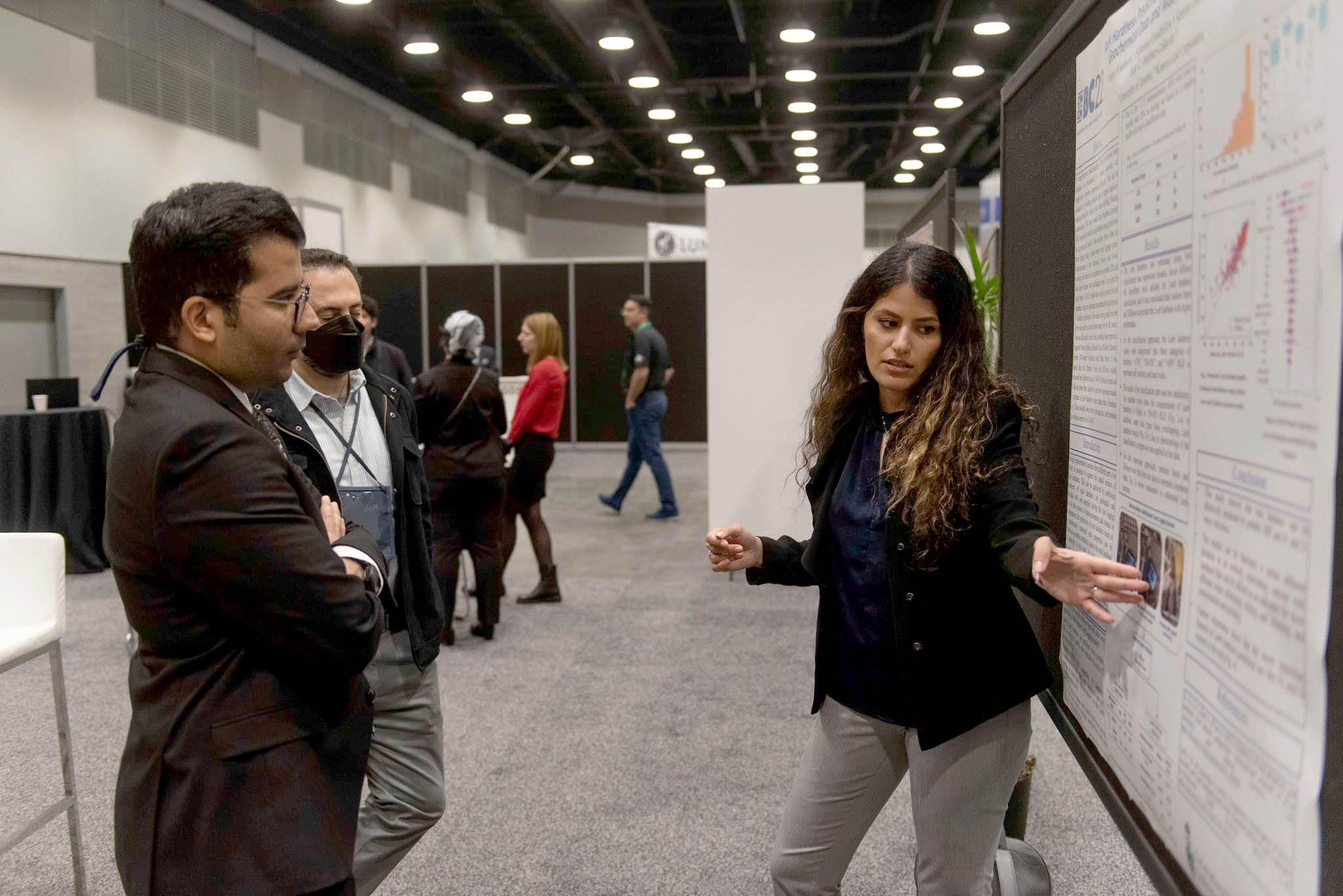
Geotechnical engineering plays a critical role in the nuclear industry, where ground performance is directly tied to safety, containment, and long-term reliability. Nuclear facilities make two very different demands on the ground: power plants must stand safely on it for many decades, and used fuel must one day rest securely within it for millennia.
Suggested pathway to prepare for a career as a
Nuclear Geotechnical Engineer
- CME525H1: Tunneling and Urban Excavation
- MIN565H1: Design and Support of Underground Mine Excavations
- CIV1429H: Advanced Rock Engineering: Fractured Rock Masses
- CIV1430H: Engineering Rock Mechanics
- CIV1498H: New Topics In Civil and Mineral Engineering: Exploration, Studies, Resources and Reserves
- CIV1504H: Applied Probability and Statistics in Civil Engineering
- CIV1404H: Numerical Methods in Geomechanics
- CIV1410H: Rock Engineering Design Practice
Meet your Instructors
John Harrison
ProfessorMining Engineering and Rock Mechanics: Rock engineering

Sebastian Goodfellow
Assistant Professor(Experimental) Rock Mechanics and Rock Physics / Bioinformatics: Applied seismology/ultrasonic and acoustic emission testing

Giovanni Grasselli
ProfessorHydraulic Fracturing/Rock Mechanics: Flow and transport in fractured porous media

Trevor Carey
Assistant ProfessorGeotechnical Engineering

Mason Ghafghazi
Associate ProfessorNumerical and Physical Modelling of Geotechnical Processes: Constitutive modelling of soils/behaviour of gravelly soils
Siting is the process of choosing and qualifying where a plant gets built: characterizing the subsurface, assessing seismic hazard, and proving the ground will support a nuclear facility through its entire service life. Geotechnical engineers provide the foundation for these projects by ensuring that the ground will safely support structures with minimal settlement and distortion, respond predictably under earthquake loading through Probabilistic Seismic Hazard Analysis and seismic site response studies, and limit groundwater flow and contaminant migration. They work across site characterization and hazard assessment, soil-structure interaction, foundation design, and ground improvement.
Research Project Highlights:
Seismic Hazard and Resilience for Critical Infrastructure
Supervisor: Trevor Carey
Canada faces unique earthquake hazards that affect infrastructure across much of the country, including northern and cold-region environments. In western Canada, the Cascadia Subduction Zone is capable of producing large, long-duration earthquakes, while eastern Canada faces the combined challenges of rare but potentially damaging earthquakes and soft, sensitive clay deposits. Our research improves the understanding of these complex hazards through advanced laboratory testing, experimental modelling, and enhanced numerical analysis tools. By better constraining these relatively uncertain conditions, this work helps reduce seismic risk and improve the resilience of critical infrastructure.

Canada is preparing to build one of the most ambitious geotechnical projects in its history: a deep geological repository for used nuclear fuel, to be constructed 650 to 800 metres down in the granite of the Canadian Shield at the Revell site in northwestern Ontario, hosted by Wabigoon Lake Ojibway Nation and the Township of Ignace. The regulatory process began in 2026; detailed ground investigation and construction lie ahead, and operations will run for decades, creating a generational pipeline of work in rock mechanics and rock engineering. The technical challenges are exactly the ones our rock mechanics and mining faculty study: Understanding the engineering behaviour of fractured rock masses, the stability of excavations at depth, coupled thermal, hydraulic, and mechanical processes as the rock responds to heat from the fuel, and long-term monitoring.
Research Project Highlights:
Characterizing Rock Stress for Nuclear Waste Repositories
Supervisor: John Harrison
Predicting and interpreting the stress state is crucial for reliable design of repository excavations. Working with the Canadian and Swedish nuclear waste management organizations, Harrison is using Bayesian data analysis techniques to develop advanced approaches for both characterizing the quality of stress measurements and producing statistical models of the stress state.

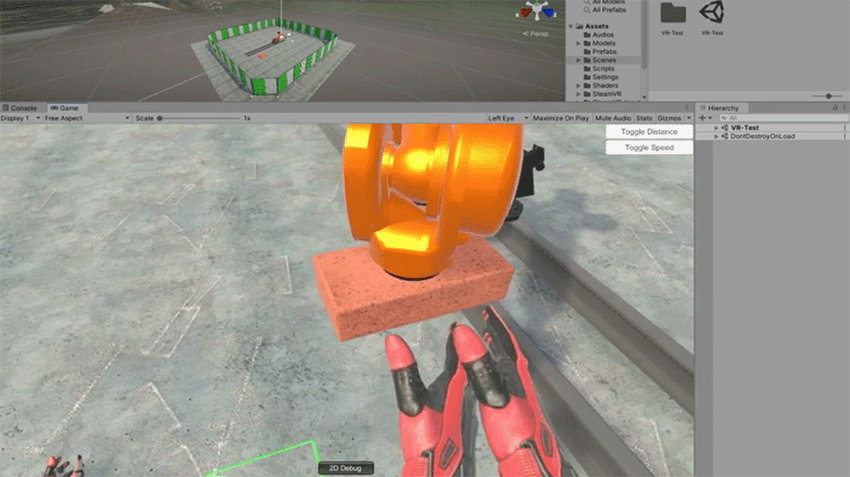
Delivering a nuclear project, whether an SMR, a refurbishment, or a decommissioning, is one of the most demanding construction management challenges. Nuclear construction requires sophisticated project delivery systems and integrated project delivery, careful pre-project planning, contracting, permits and approvals, and design management that spans value engineering, constructability analysis, cross-discipline coordination, and building information modelling (BIM). Managing these large-scale projects means rigorous budgeting, scheduling, safety, and submittal processes, together with genuine community engagement: profiling community needs, building outreach mechanisms, and maintaining responsive communication.

Meet your Instructors

Daeho Kim
Assistant ProfessorConstruction Management: 3D reconstruction and digital twin of ongoing construction projects

Tamer El-Diraby
ProfessorConstruction Project Management: Informatics and knowledge management (socio-semantic analytics)
Research Project Highlights:

Get an Overview of the Industry
Whichever specialization you pursue, you can add a broad, industry-wide view of nuclear energy through two new graduate courses offered by the Department of Materials Science & Engineering as part of the Atomic Energy Materials and Systems (AEMS) cluster. Both are open to CivMin graduate students, are taught by a combination of U of T professors and industry experts from organizations such as Kinectrics and Ontario Power Generation, and include site visits, workshops, and interaction with industry practitioners.
MSE1074H - Fundamentals of Atomic Energy Materials Systems & Sustainability I
A fundamental course that provides a grounding in nuclear science, engineering, and applications. Subject areas include atomic-nuclear physics, nuclear materials, and nuclear reactor physics; radiation fundamentals, detection, safety, and health physics; radioisotopes and nuclear medicine; advanced materials and manufacturing for next-generation reactors and systems; and future nuclear reactors, including small modular reactors (SMRs), fusion, and energy sustainability.
MSE1075H - Fundamentals of Atomic Energy Materials Systems & Sustainability II
A fundamental course that provides a grounding in nuclear engineering. Subject areas include an overview of atomic-nuclear physics, nuclear materials, and nuclear reactor physics; nuclear thermal hydraulics and power generation systems; nuclear corrosion chemistry, materials degradation mechanisms, and fitness-for-service; nuclear civil structural requirements; non-destructive testing and evaluation; and nuclear systems, operations, robotics, and AI.
Go Deeper: The MEng Emphasis in Nuclear Engineering
If you want your nuclear training recognized on your transcript, MSE1074H and MSE1075H can take you further: they are the two core courses of the Faculty-wide MEng Emphasis in Nuclear Engineering, which is open to CivMin MEng students. Completing the emphasis requires four half courses (2.0 FCE): both core courses plus at least two electives from a list that includes CivMin’s CIV1201H (Concrete Technology and Non-Destructive Testing Principles).
Career Outlook
The nuclear sector's workforce needs are urgent and growing. Governments, regulators, utilities, and consultancies across Canada, from the Canadian Nuclear Safety Commission to Ontario Power Generation, Bruce Power, Kinectrics, AtkinsRealis, and Canadian Nuclear Laboratories, are actively recruiting engineers with exactly the specializations our department teaches.
A CivMin MEng from the #1 Civil Engineering program in Canada can open up a world of opportunities and supercharge your career. The University of Toronto is ranked #12 globally for graduate employability by Times Higher Education, and our alumni have secured exciting roles at a wide variety of top companies including Hatch, WSP, Aecon, Kiewit and Metrolinx.